Speculation A thought experiment, not a plan
From your boots to the edge of the world, and under it.
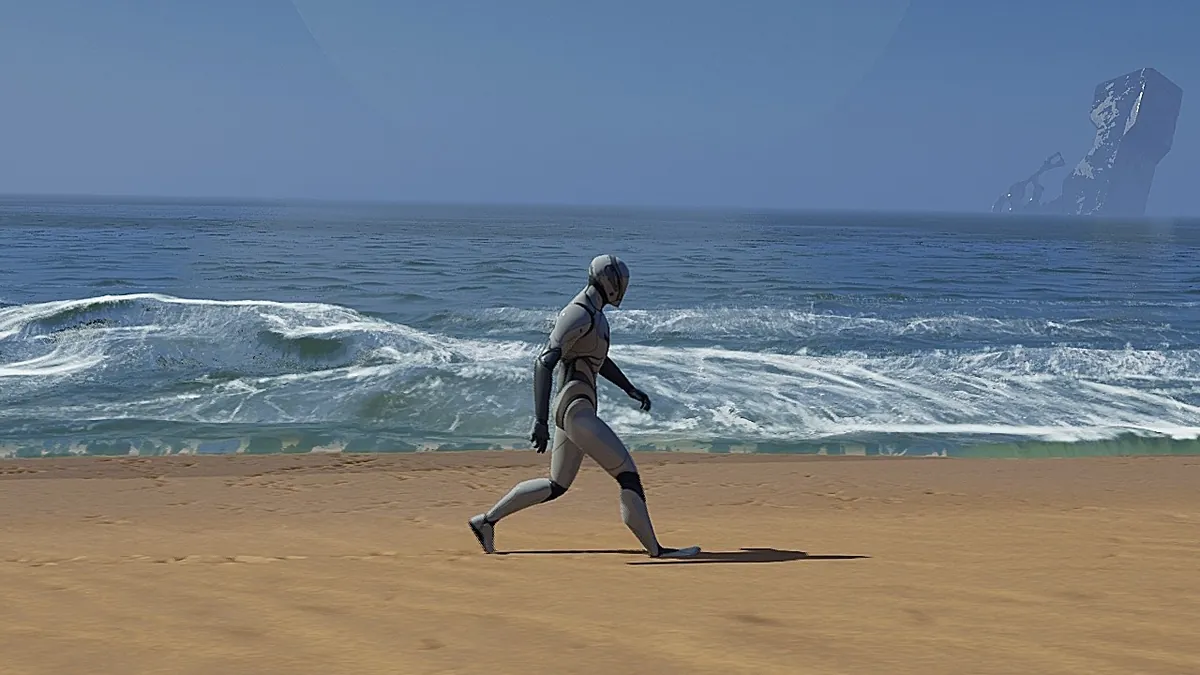
Today FluidNinja draws the water up close, and players who join a game see water within about 32 m. This section asks a bigger question. If the same water had to reach the horizon of the largest world Unreal Engine can hold, how might the work split, across and down? Our guess: particles for the splash at your feet, the cells for the water you can change, and FluidNinja's surface carried out to the horizon. Only the cells, drawn up close by FluidNinja, run today. The particles are planned; carrying FluidNinja's surface to the horizon runs against our current plan.
1 · AT YOUR FEET
APIC for the splash
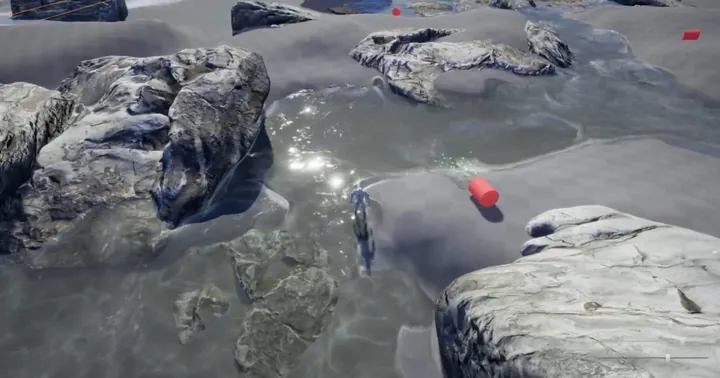
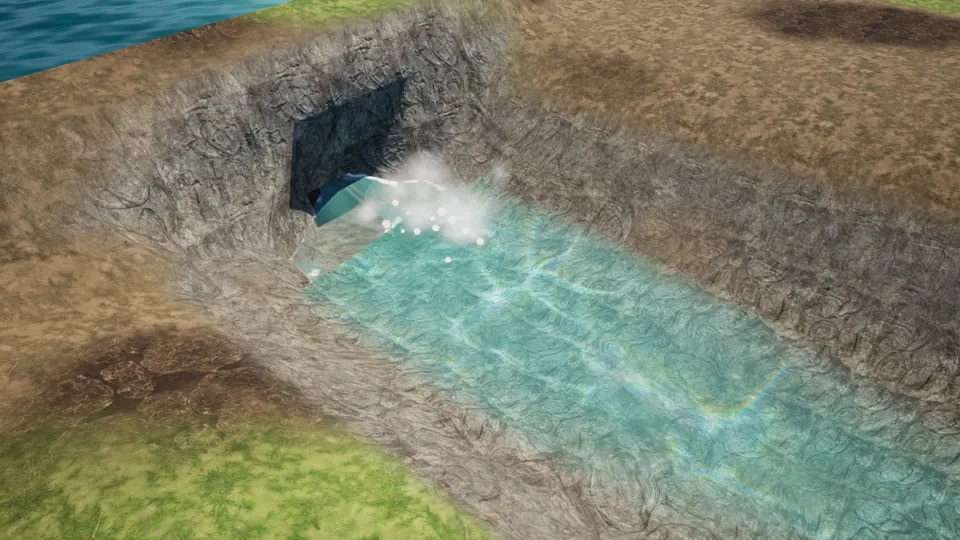
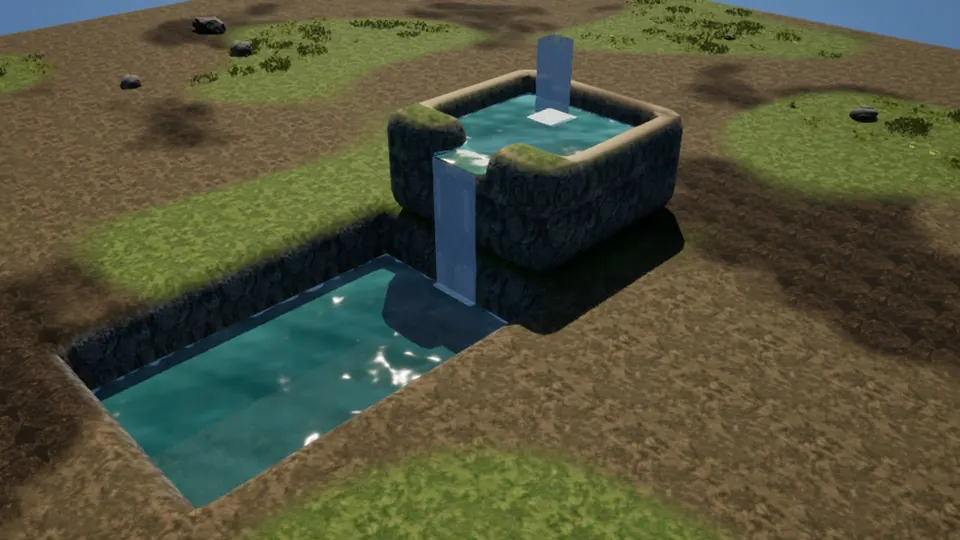
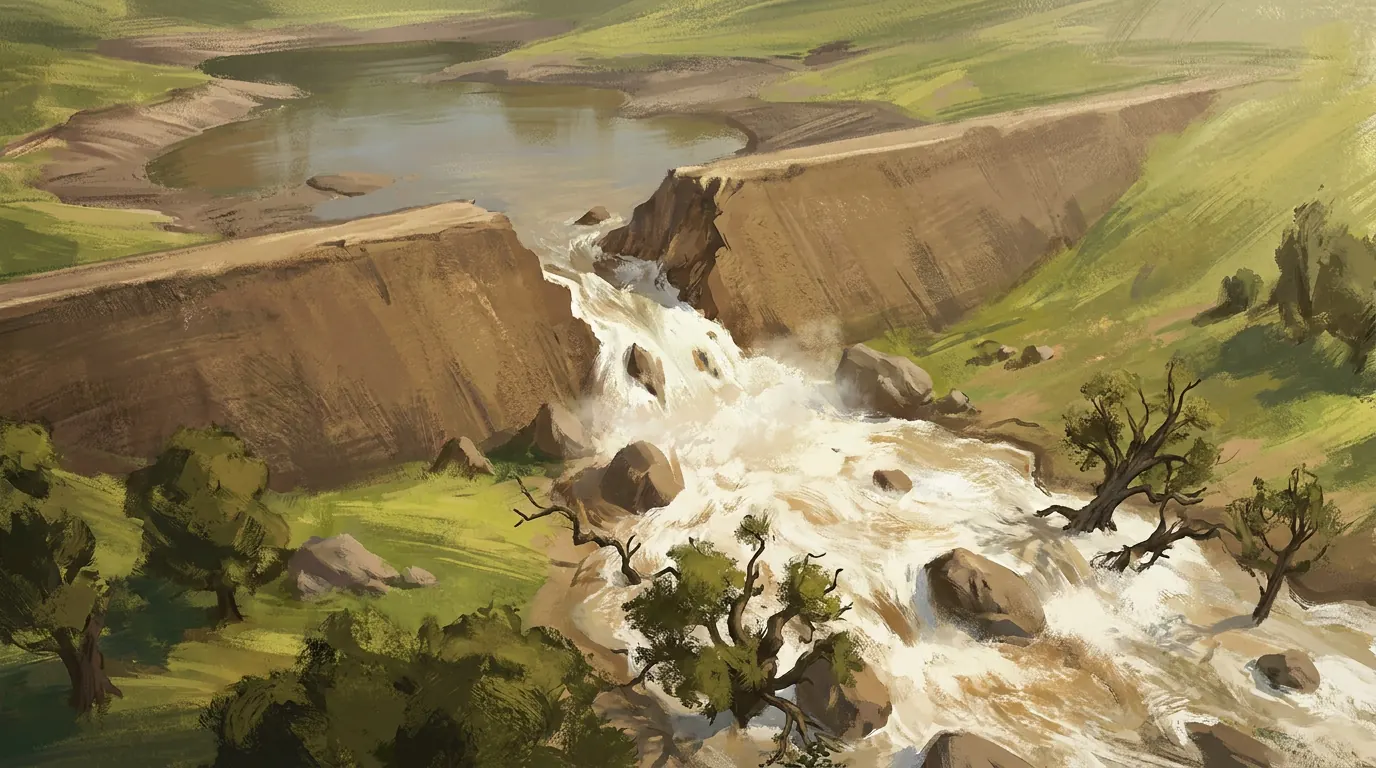
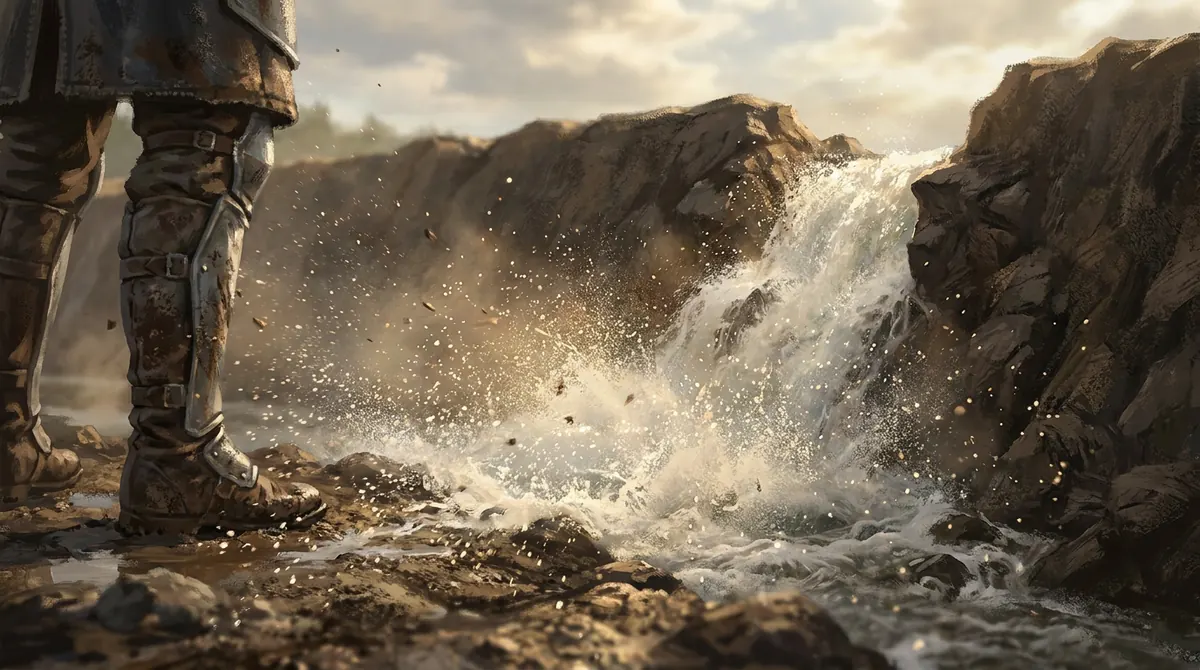
Where water jets through a gap, falls or splashes, a zone of particles about 16 m across would take over the look: droplets and sheets that keep their swirl. APIC (affine particle-in-cell) is a particle-and-grid method that's stable and holds on to rotation. It's planned as a cosmetic layer on each player's machine. It never changes the gameplay water, and two players may see different spray.
Planned · nothing built or measured yet
2 · AROUND YOU
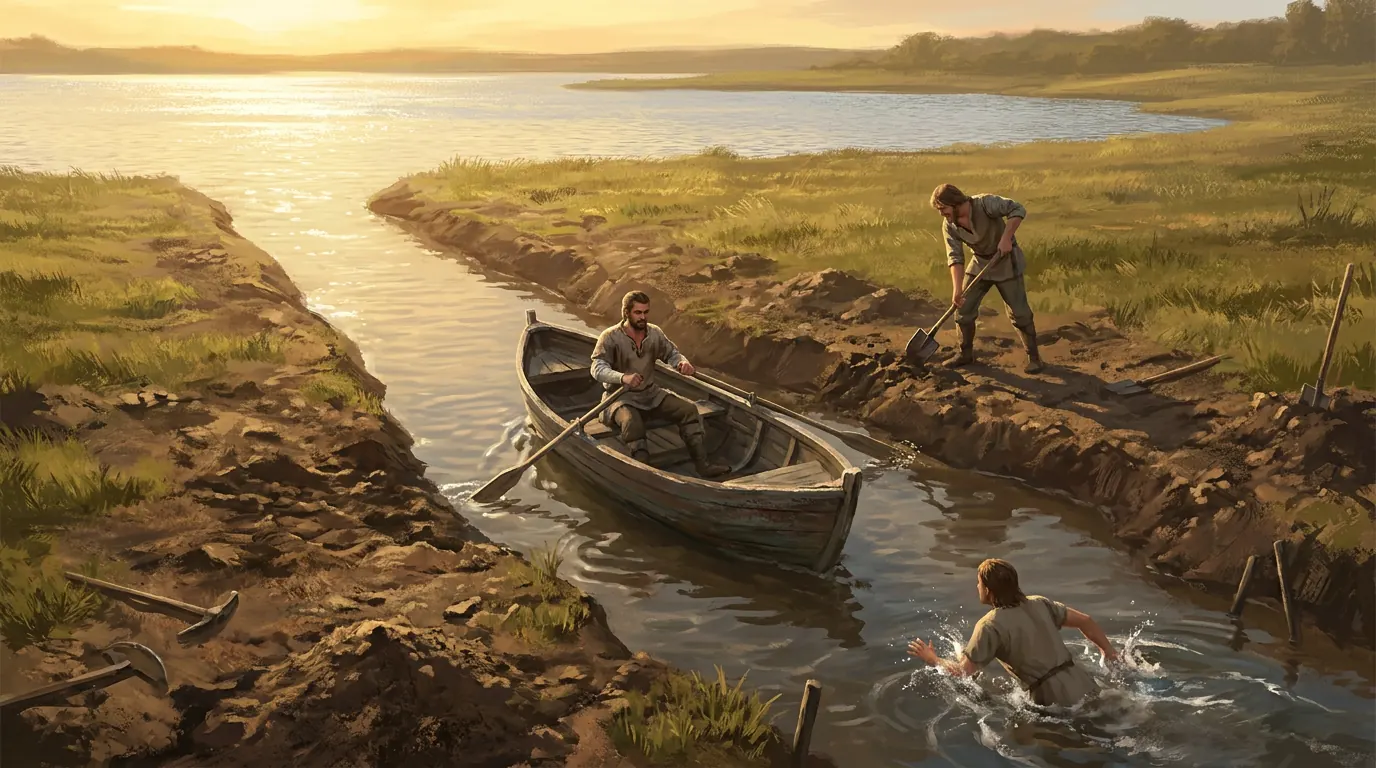
The cells stay in charge
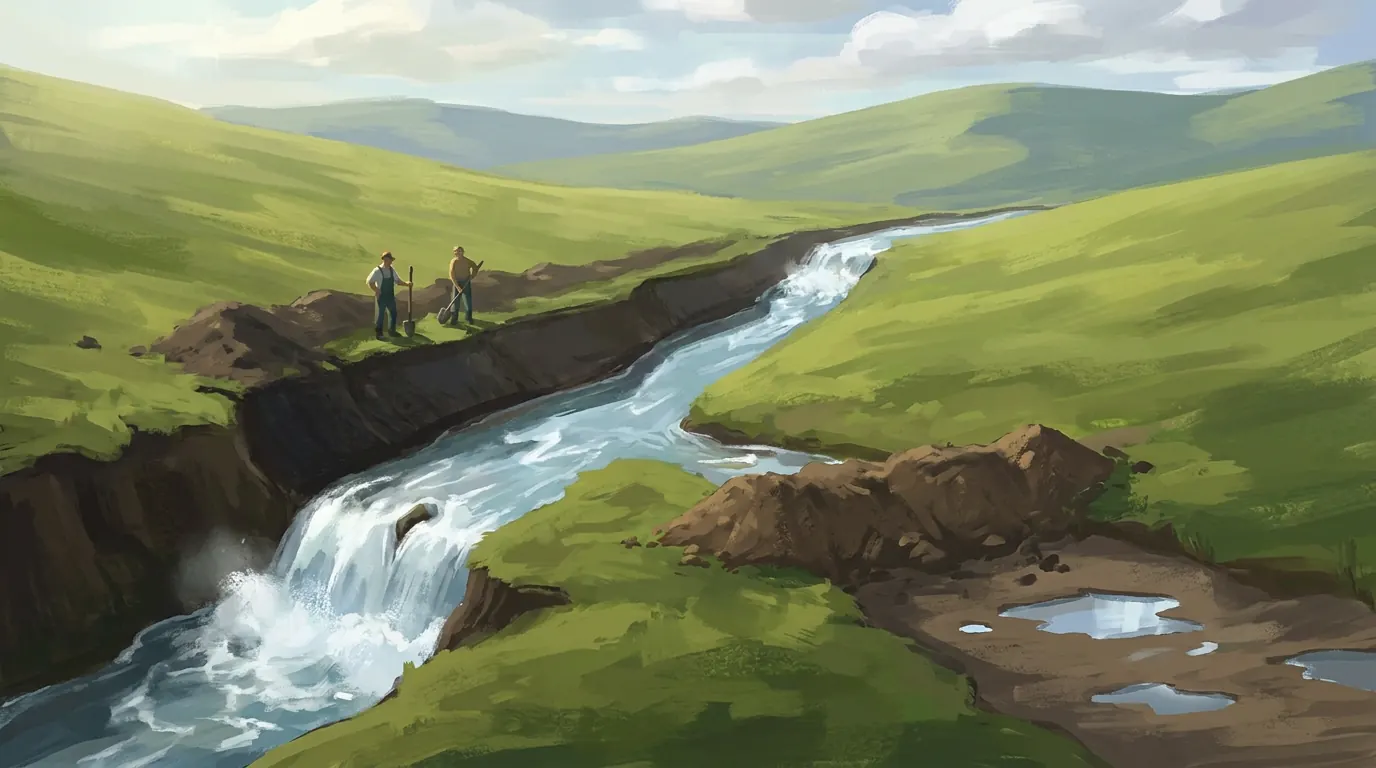
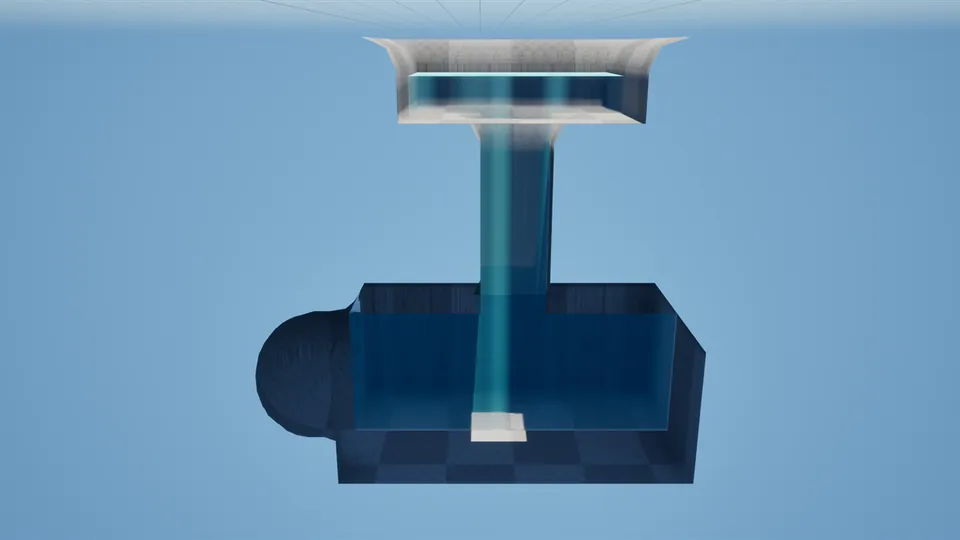
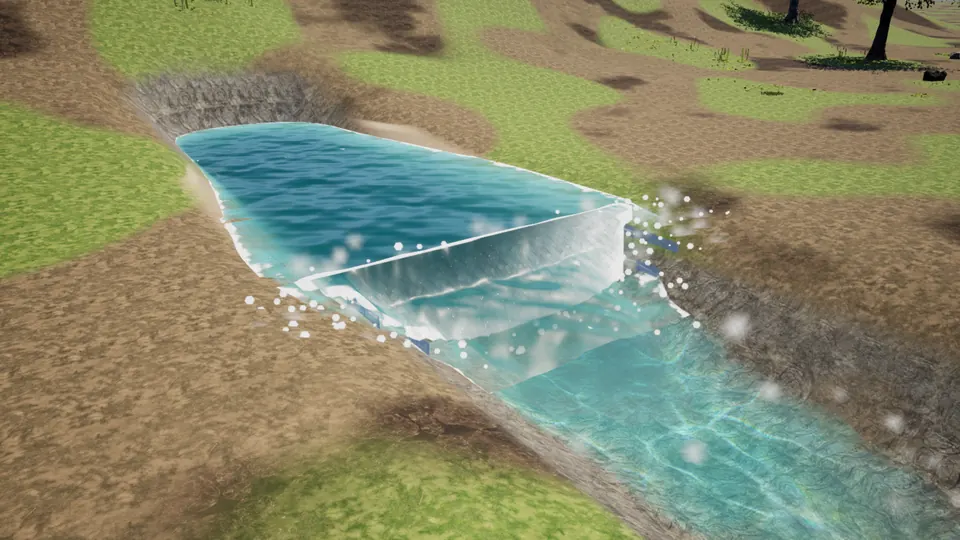
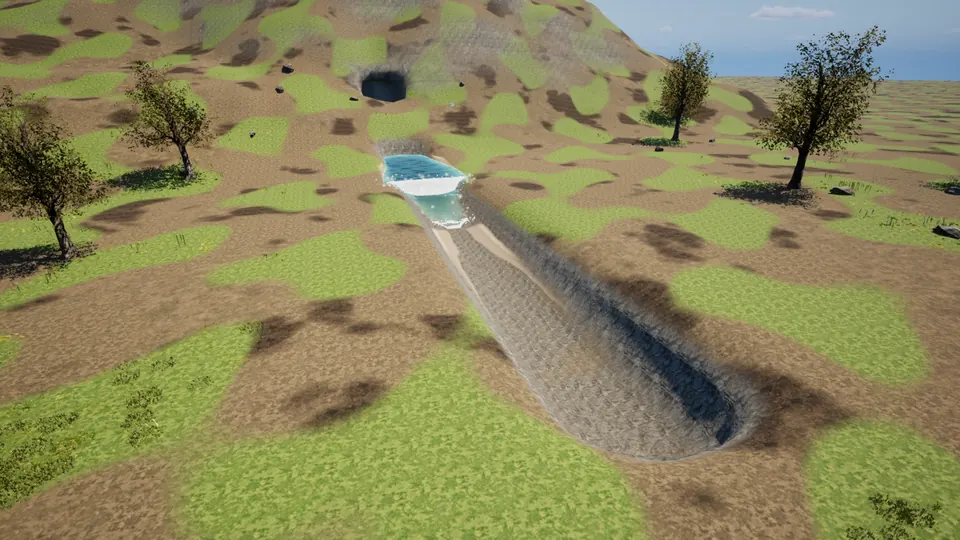
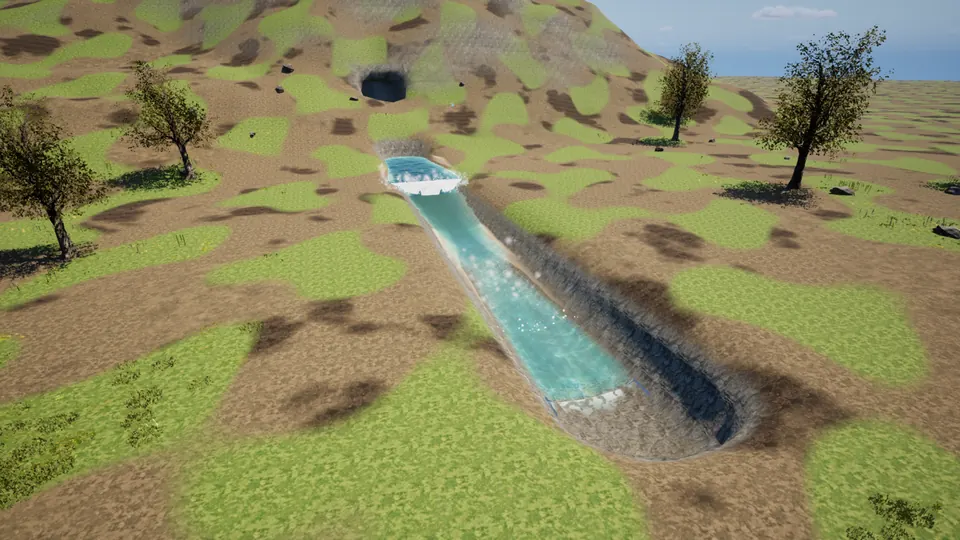
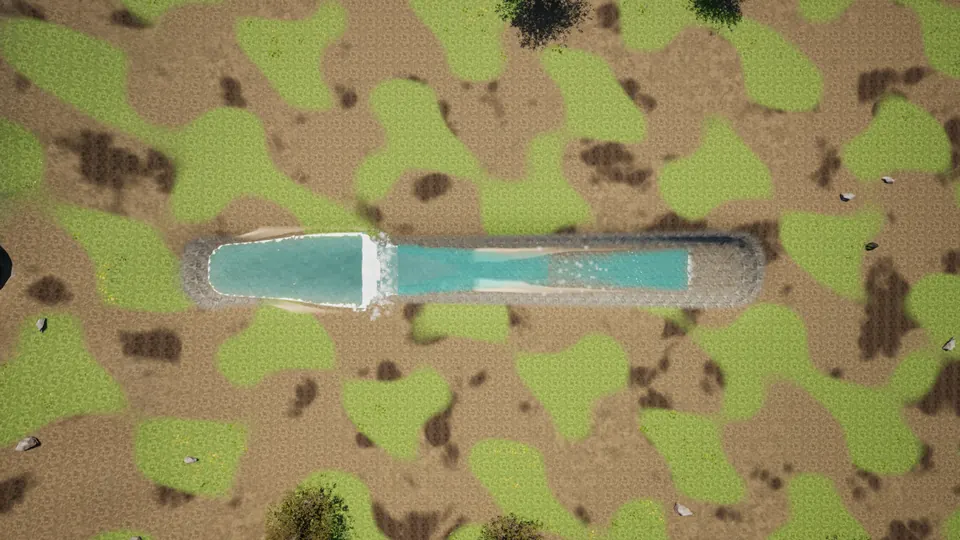
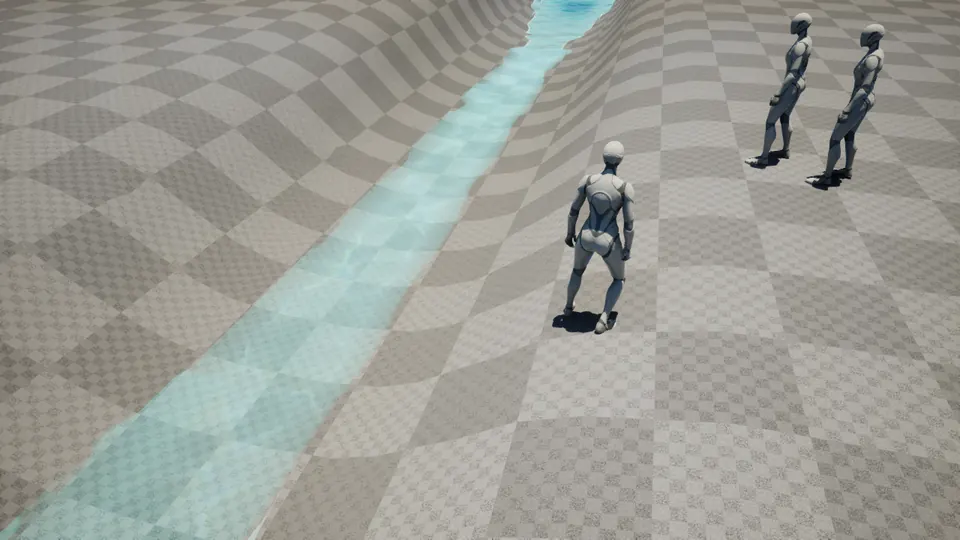
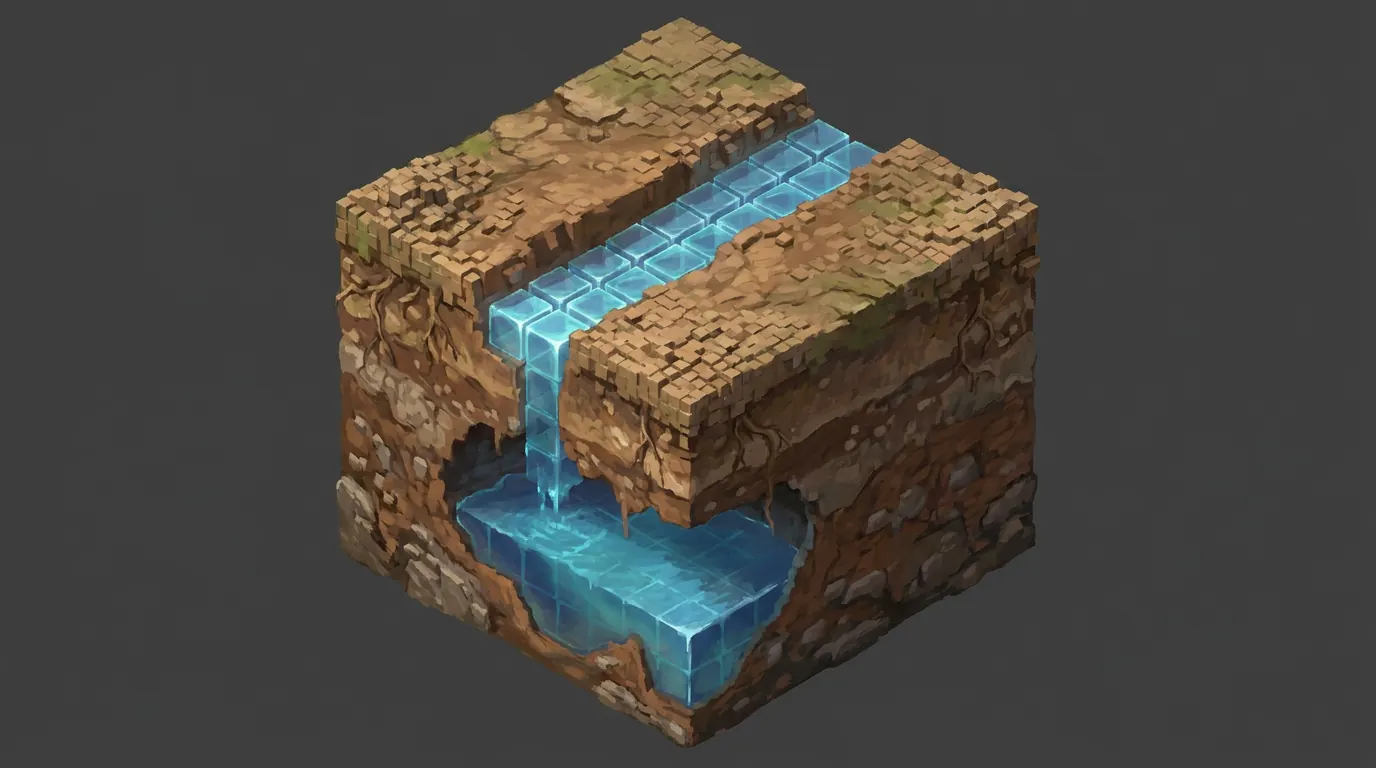
The water you can dig, dam and flood stays in half-metre cells, run by the server, with FluidNinja drawing it up close. That's the part that works today: one water area up to 256 m, and about 32 m of view for players who join.
Built, on small test levels
3 · TO THE HORIZON
FluidNinja's surface, further out
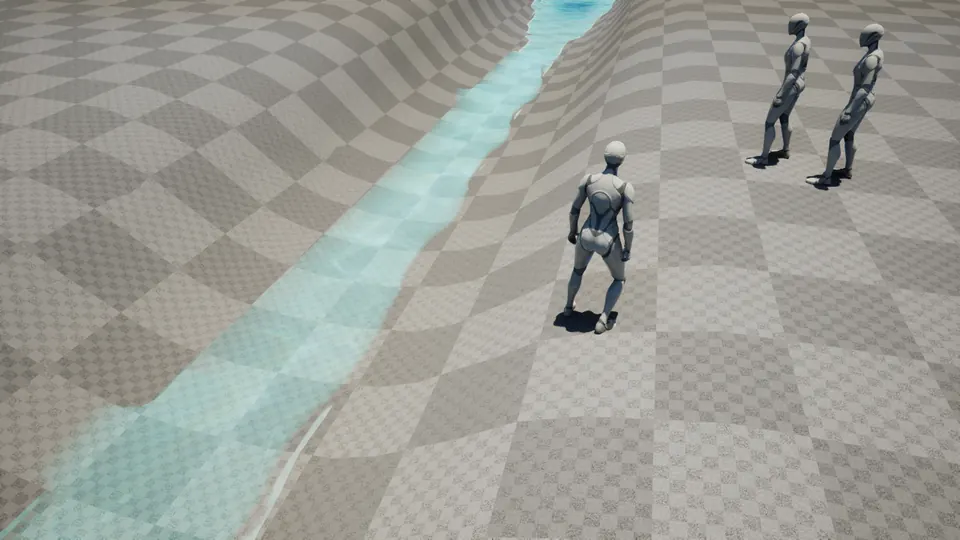
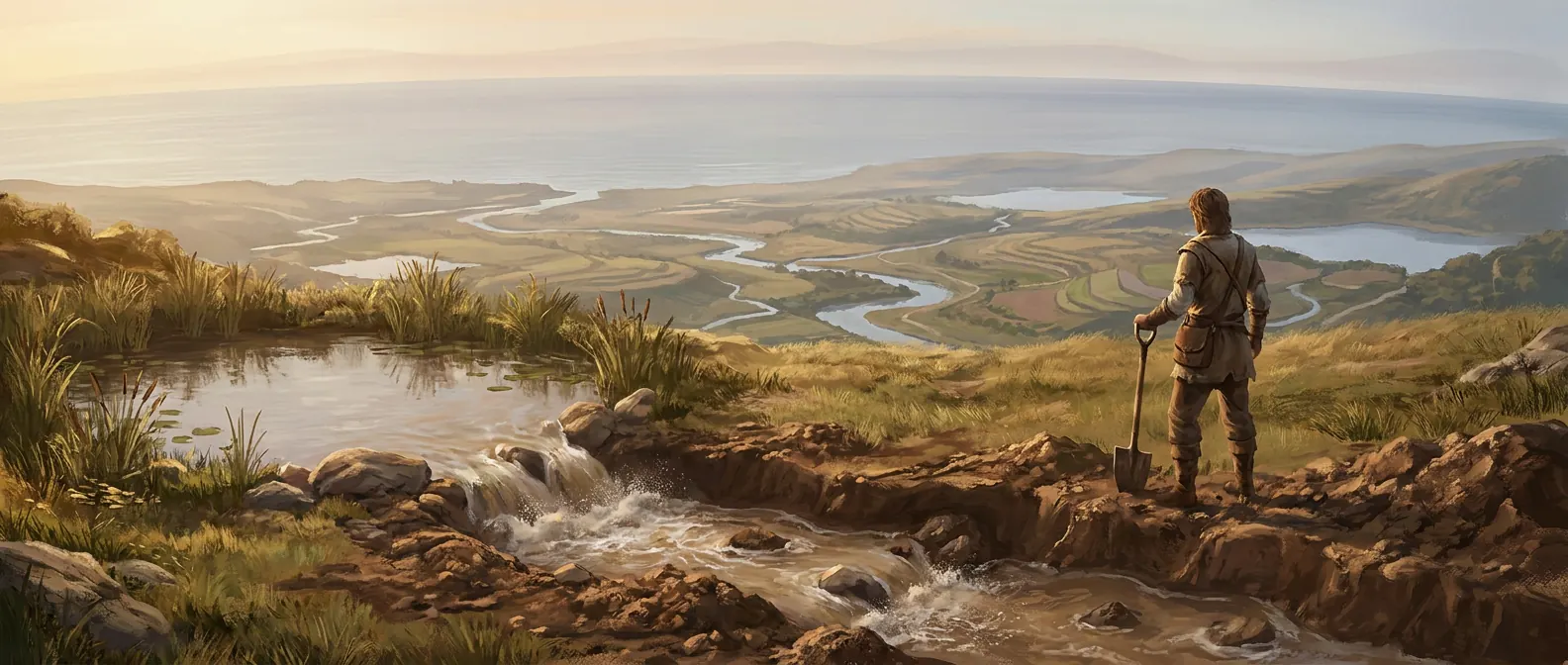
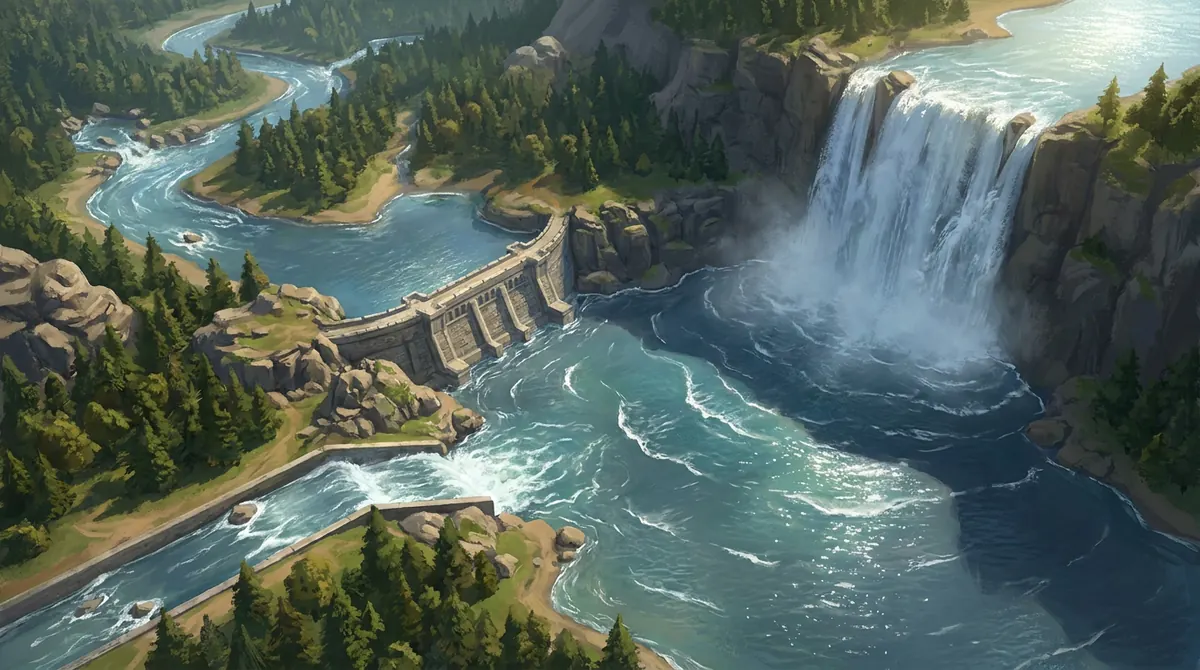
FluidNinja runs a live 2D simulation that follows the player, usually over 5 to 100 m. Its makers carry the water on past that with passive, unsimulated surface patterns, with the mesh detail dropping away with distance. The idea: feed those far patterns from our own lake and river levels, so the horizon shows the right water in the right place. Our current plan draws far water with our own surfaces instead.
Speculation · not in our plan
4 · THE WHOLE WORLD
88 million km of room
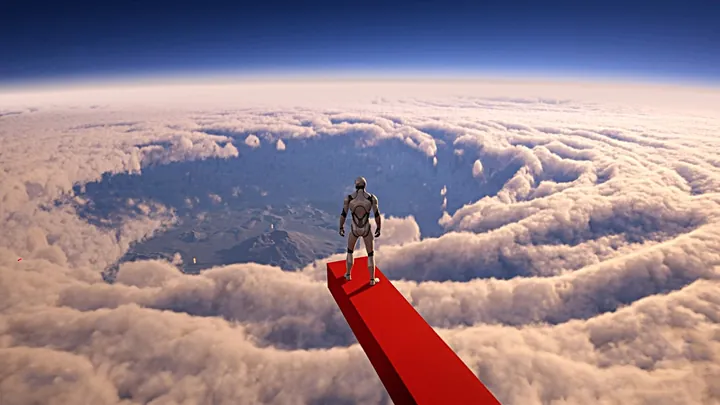
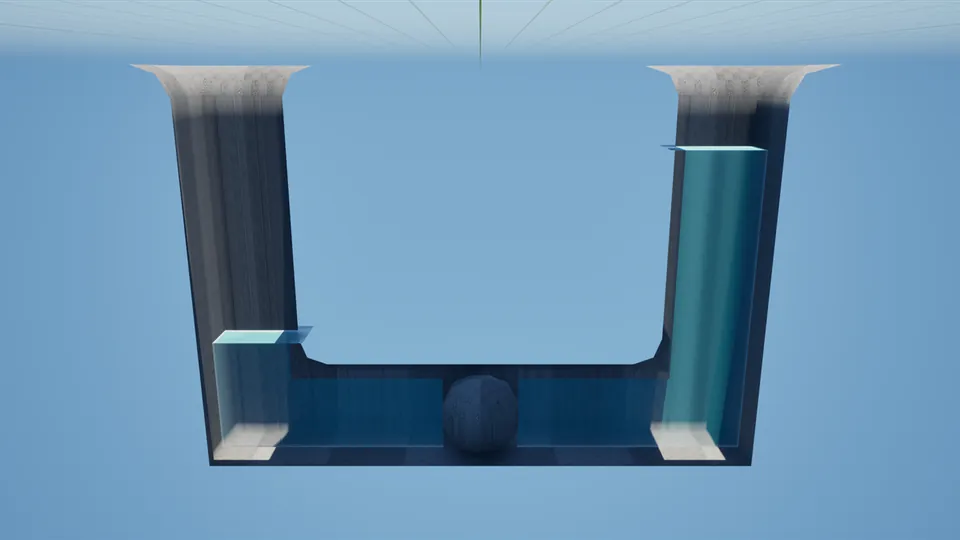
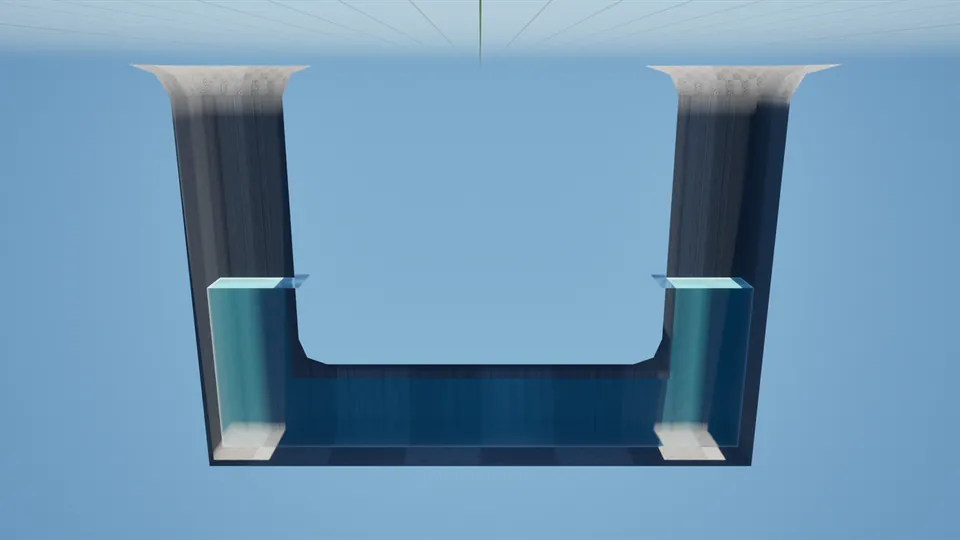
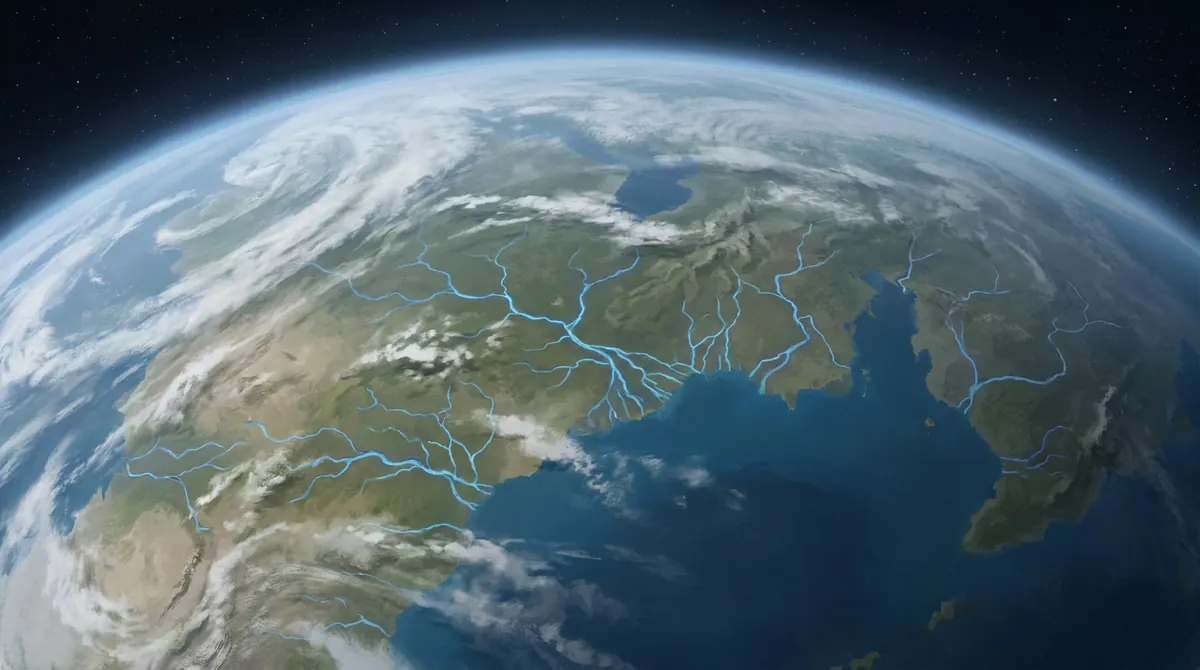
Unreal Engine 5 keeps positions in 64-bit numbers, and its largest world is about 88 million km edge to edge, or 44 million km either way from the centre. Our map-wide plan uses full cells near players, coarser water further off and sleeping still water. The guess is stretching that across the whole world. A small water test now works 1,000 km from the origin; that checks position handling, not water covering that distance. Today's water area is still a box of up to 256 m.
Speculation · map-wide water is planned
5 · BELOW YOU
As much room down as across
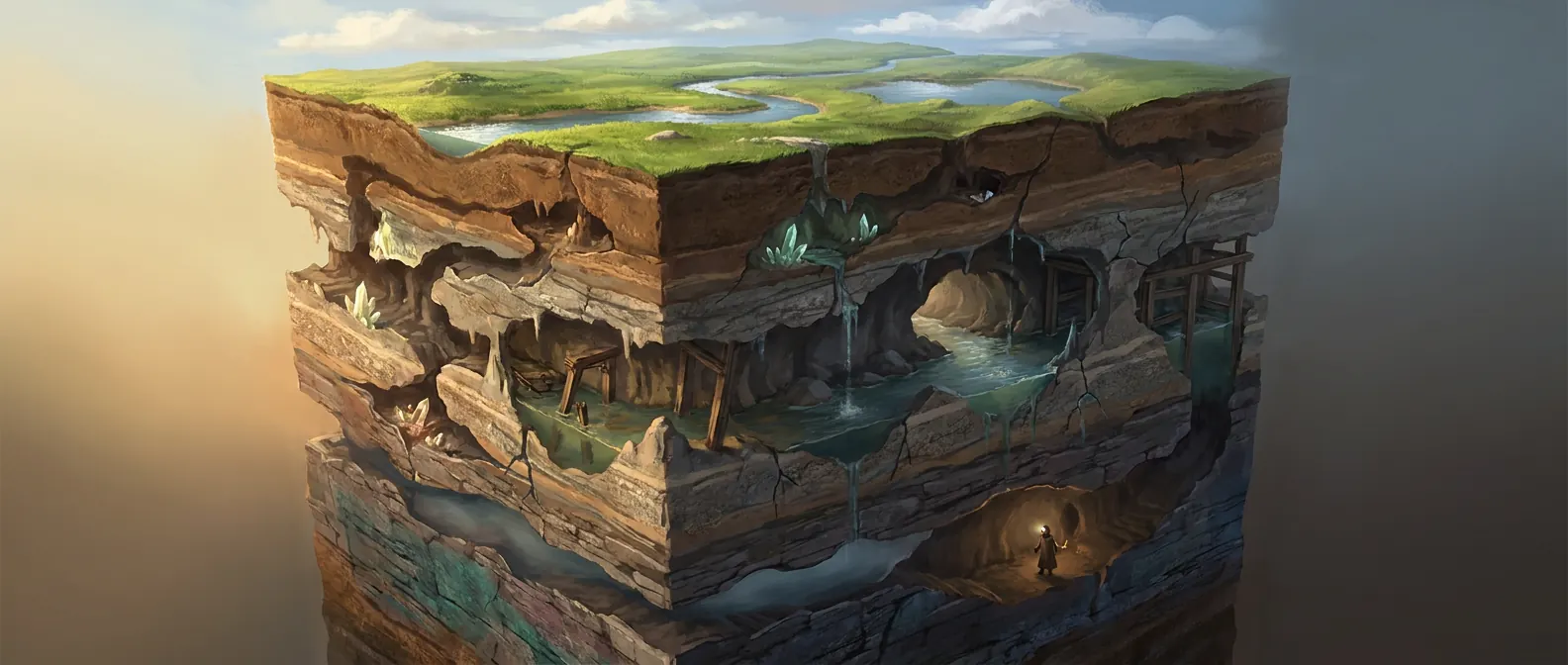
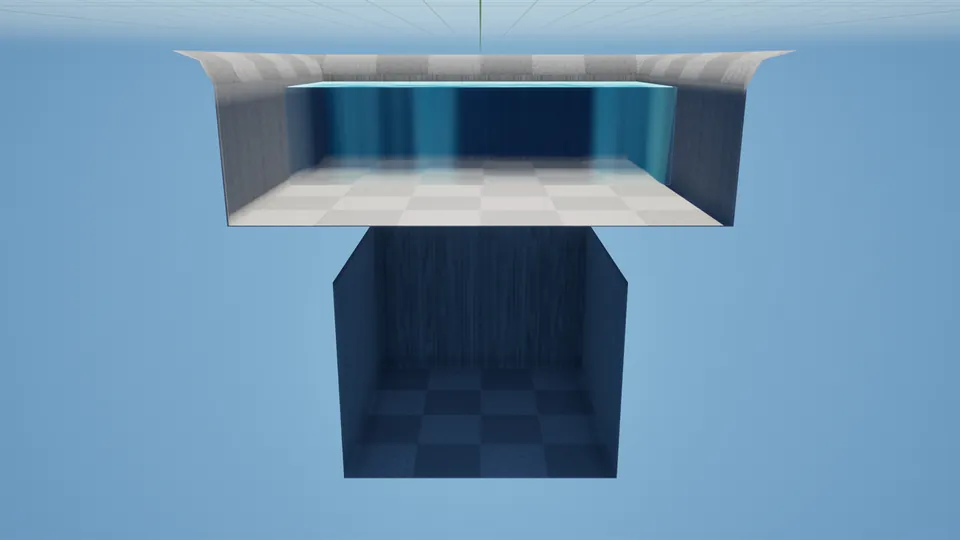
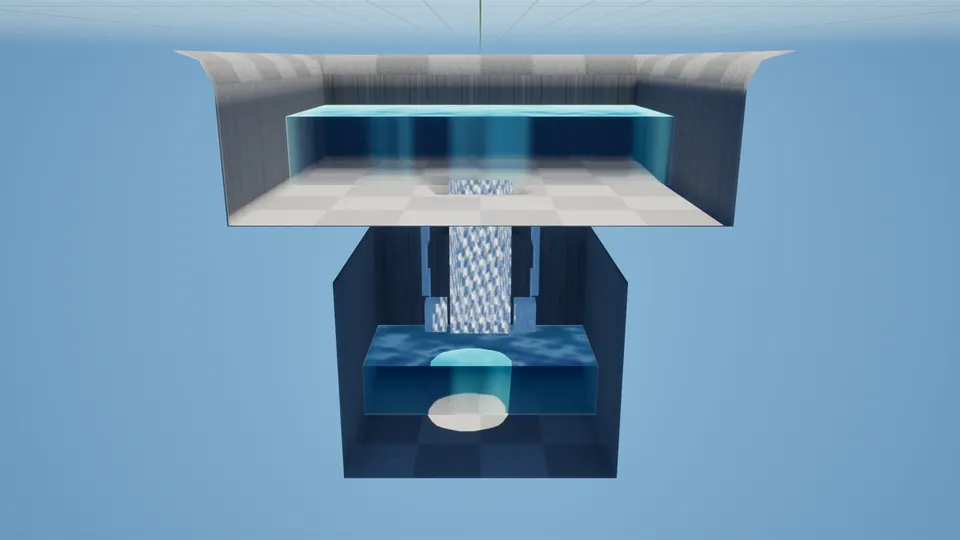
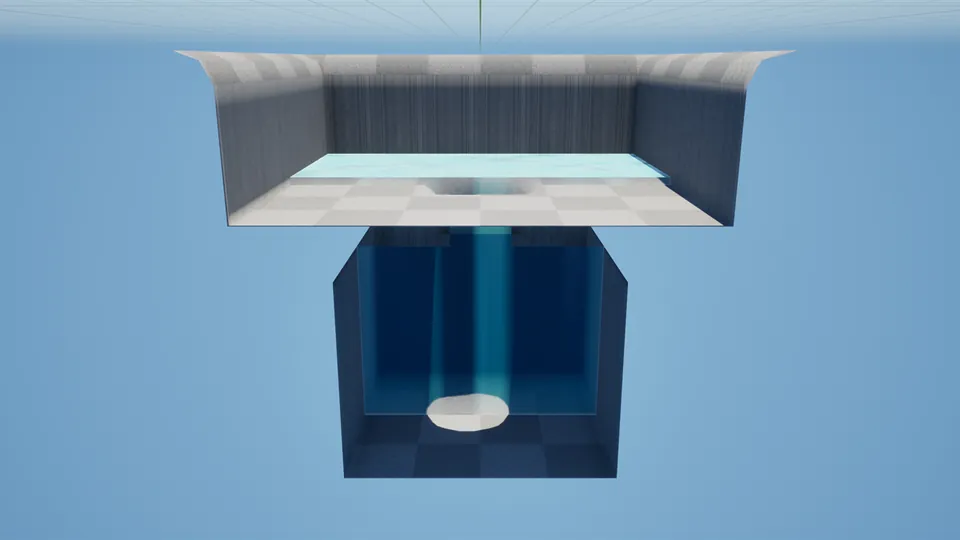
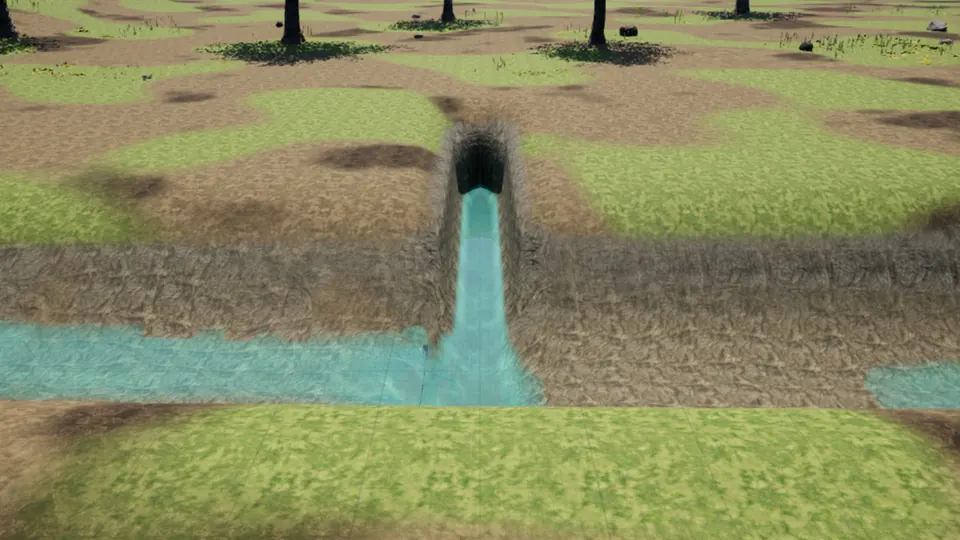
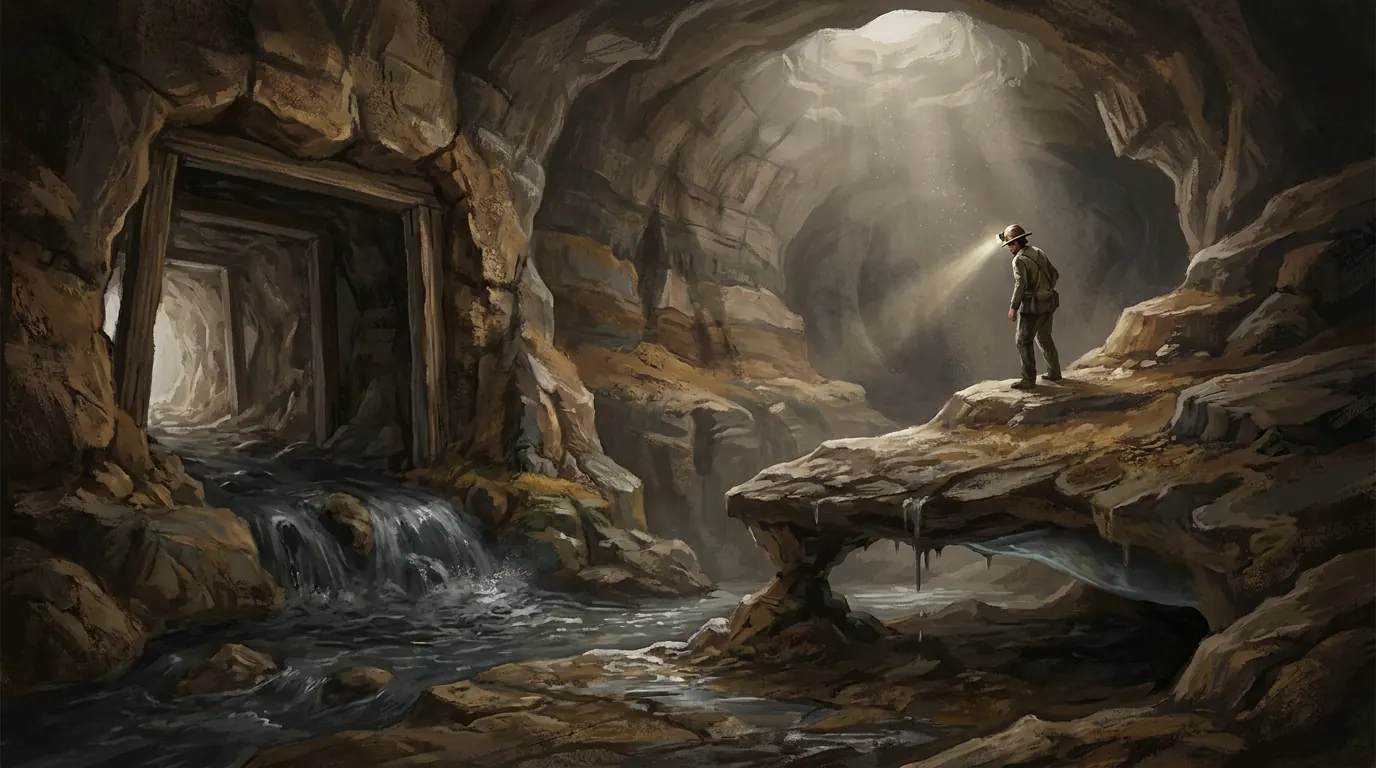
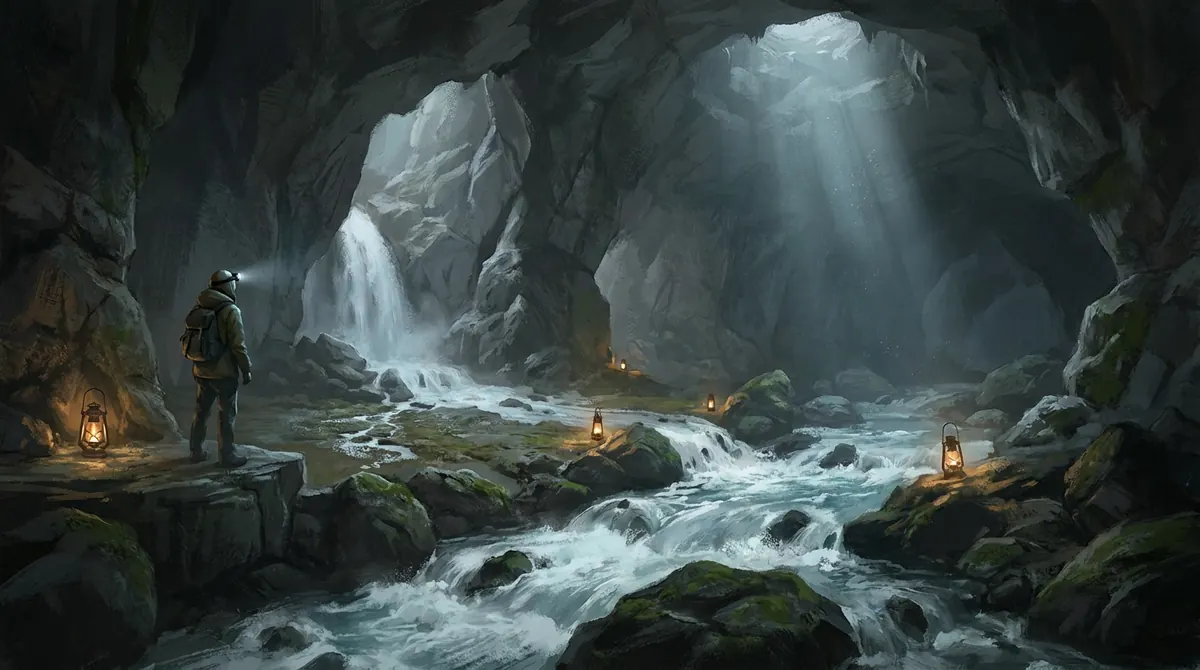
The cells are 3D, so caves, tunnels and flooded workings are the same water as lakes and rivers. Our map-wide plan adds groundwater and a water table. The guess is a whole world with water in the rock beneath it: aquifers, underground rivers and flooded mines, coarse until someone digs in. The deepest hole people have dug on Earth is about 12 km. Unreal's world goes millions of kilometres down.
Speculation · groundwater is planned, not built
It's been done in film. For Disney's Moana, close-up "hero" waves around boats and characters came from an APIC solver, art-directed and tsunami-scale waves from a cheaper procedural tool, and both were blended into the rest of the ocean (SIGGRAPH talk). The split we're guessing at is a similar idea, only it would have to run live in a game.

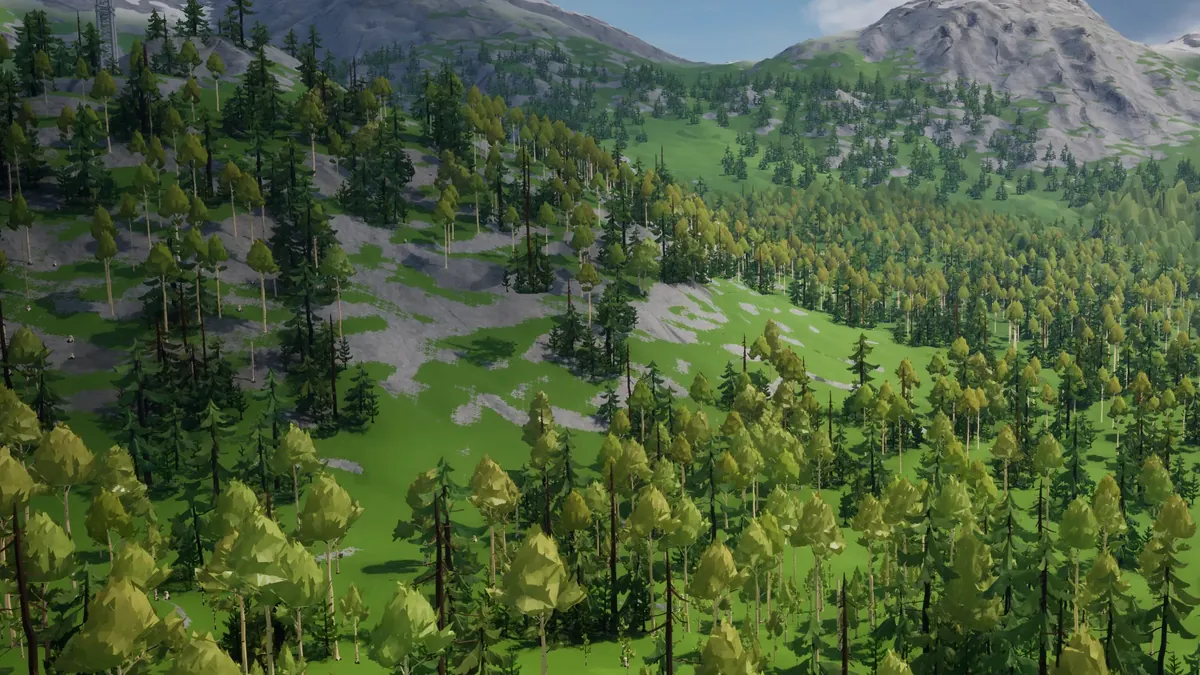 From the maker
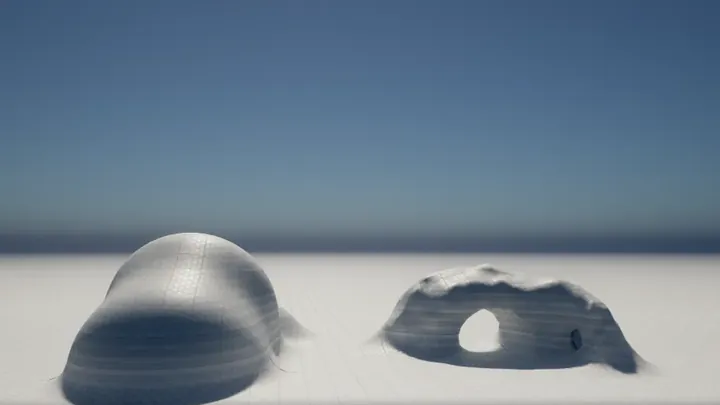 From the maker
 From the maker